
The sharp tang of homemade rhubarb compote perfectly complements a creamy vanilla bean panna cotta – the most elegant grown-up rhubarb and custard you’ll ever make – a delicious springtime rhubarb panna cotta dessert.

Rhubarb, rhubarb… apparently when actors are pretending to talk in the background when onscreen, that’s what they mumble. It’s meant to be indistinct and contains no recognisable sounds. That might be so for the word, but boy is actual rhubarb anything but indistinct and unrecognisable!
The unmissable bright pink stems and giant fan-like leaves (remember to always remove them: they are poisionous!) that spring up in our veggie area in April put a little spring in my step and send my Pinterest boards into meltdown, as I think of all the wonderful things I can do with them.
Until I finally tried rhubarb in my late teens, I’d been content to say that I liked rhubarb on the basis of being able to demolish a packet of rhubarb and custard sweets in one sitting. Of course, they weren’t real rhubarb but the bright pink and yellow sweets tasted in my mind just as rhubarb should do. How wrong was I?
Fresh, real rhubarb isn’t sickly sweet, but sour, wonderfully sour in fact with a sharpness that cuts. As I’ve learnt over the years, using rhubarb just as it is, is ok, but to truly appreciate the flavour of this beautiful vegetable a little sweetening helps it to get on with other flavours; and there’s nothing better than with a smooth, creamy panna cotta.
Think of it as a grown-up rhubarb and custard – all the nostalgia of those pink and yellow sweets, but in an elegant, wobbly dessert glass. So that’s exactly what I did with the first crop… rhubarb panna cotta.
What is panna cotta?
Panna cotta is an Italian dessert – the name literally means ‘cooked cream’, and it’s one of the most elegant things you can make with almost no effort at all. You heat sweetened cream, dissolve gelatine into it, pour it into glasses or moulds, and leave it to set in the fridge. That’s it.
The result is a smooth, silky dessert that sits somewhere between a jelly and a mousse in texture – soft enough to tremble when you move it, firm enough to hold its shape on the plate. It’s one of those recipes that looks far more impressive than the effort involved, which is always a good place to be.
For this version, we’re pairing a classic vanilla bean panna cotta with a sharp, jewel-coloured homemade rhubarb compote. The contrast of the cool, sweet cream against the bright tartness of the rhubarb is what makes it sing – and it’s why I think of it as a proper grown-up rhubarb and custard.

What you need to make rhubarb panna cotta
One of the best things about this recipe is how short the ingredients list is. Here’s what matters and why:
For the rhubarb compote
- Rhubarb – Fresh is best for this and thankfully it’s one of the earliest things in the kitchen garden. You want the stems only; the leaves must always be removed and discarded as they are poisonous. Forced rhubarb (the bright pink early-season variety) gives you a more vivid colour and a slightly sweeter result than the green outdoor variety.
- Caster sugar – Raw rhubarb is very tart and needs sweetening. Caster sugar dissolves quickly without making the compote grainy.
- Lemon juice and zest – Brightens the flavour of the rhubarb and helps it keep its colour. Don’t skip it.
- Honey – A tablespoon of honey adds a gentle floral note that rounds off the sharpness of the rhubarb without making it cloying.
For the vanilla panna cotta
- Double cream – This is the backbone of the panna cotta. It sets to that silky, rich texture. Don’t be tempted to use single cream — it won’t set properly.
- Full-fat milk – Adding milk cuts through some of the richness and gives a slightly lighter result. The ratio here (400ml cream to 150ml milk) is calibrated for a good set with just enough wobble.
- Gelatine sheets – I prefer sheets over powder for this recipe as they’re easier to measure accurately. The exact amount matters, too much and the panna cotta is rubbery, too little and it won’t set. See the vegetarian note below for an agar agar alternative.
- Vanilla bean paste – Use paste rather than extract if you can; those little specks of vanilla bean in the set cream are part of what makes panna cotta look so beautiful and they carry much more flavour.
How to make rhubarb panna cotta
Full quantities and step-by-step instructions are in the recipe card below
Start with the rhubarb compote – chop the rhubarb, add to a pan with the sugar, lemon and honey, cover and cook on a gentle heat for 15–20 minutes until it breaks down. Set aside to cool. This can be made days ahead.
For the panna cotta, soak the gelatine sheets in cold water for 5 minutes while you heat the cream, milk, sugar and vanilla together until just coming to the boil. Remove from the heat, squeeze out the gelatine sheets and stir them in until completely dissolved. Pour through a sieve into a jug, divide between 6 glasses and refrigerate for at least 6 hours – overnight is ideal.
When ready to serve, spoon the cold rhubarb compote on top of each panna cotta. That’s it. Twenty minutes of actual work for one of the most elegant things you can put in front of people.
Tips for a perfect panna cotta every time
- Don’t get too heavy-handed with the gelatine – I use sheets rather than powder, it’s easier to measure. Remember to squeeze the water out before adding to the cream.
- Cut some of the richness by swapping out half of the cream. Instead, try buttermilk but add it when the gelling agent is added after heating.
- Or if you’re after a more tropical taste, switch out the milk for coconut cream and add passionfruit pulp.
- If you are using moulds don’t be scared – take a knife and run it around the edge of the mould, then dip the mould in hot water until the panna cotta is just coming away from the side. When you’re ready, put a plate over the top of the mould and turn them over. Gently lift the mould off and hopefully, the panna cotta is sitting pretty!

What to do with leftover rhubarb
If you’re lucky enough to have a rhubarb patch, you’ll know the problem: it produces more than you can ever eat in one go. Here are my favourite uses beyond this recipe – and don’t forget the compote recipe above works brilliantly as a standalone, not just as a panna cotta topping.
- Make a cocktail syrup – strain the compote through a fine sieve to separate the rhubarb pulp from the liquid. The syrup is a beautiful deep pink and works brilliantly in a gin and tonic, a spritz or a mocktail.
- Make a curd – like my lemon and gin curd, it will have a real tartness that will work well with a sugary meringue or pavlova
- Add it to salads – roast the rhubarb and add to a goats cheese salad
- Get savoury – make a chutney and serve with cheese and biscuits alongside a balsamic onion chutney
- Be classic – if it’s not in a pie, it’s in a crumble. Yes, it’s the staple thing to make with rhubarb but add a good creamy custard and you’re in pudding heaven
- Use it as a cheesecake topping – the compote from this recipe works perfectly spooned over a plain vanilla cheesecake or a baked cheesecake. It’s sharp enough to cut through the richness of the cream cheese.
And if you’re still not sure, chop up the rhubarb into 2cm pieces and freeze for up to a year. Just don’t forget to remove the leaves – they are poisonous!
FAQs
What is panna cotta?
Panna cotta is an Italian dessert made by gently heating sweetened cream, setting it with gelatine, and leaving it to chill until firm. The name means “cooked cream” in Italian. It has a smooth, silky texture, softer than a jelly but firmer than mousse, with a delicate wobble when you tap the glass. It’s one of the simplest desserts you can make, needing only a handful of ingredients and about 15 minutes on the hob.
Does rhubarb panna cotta taste like rhubarb and custard?
Very much so and that’s exactly what makes it so good. The sharp, sweet rhubarb compote cuts through the rich, creamy vanilla panna cotta in the same way that tart rhubarb sweets play against their custard coating. If you love rhubarb and custard flavours, this is the most elegant way to serve that combination.
Can I make rhubarb panna cotta in advance?
Yes, this is an ideal make-ahead dessert. The panna cotta can be made up to 2–3 days in advance and stored tightly covered in the fridge. Make the rhubarb compote separately and keep it in an airtight container in the fridge for up to a week. Add the compote on top just before serving for the best presentation.
Can I make panna cotta without gelatine (vegetarian or vegan)?
Yes, swap the gelatine sheets for agar agar, which is plant-based and suitable for vegetarians and vegans. Use approximately 1 teaspoon (about 3g) of agar agar powder in place of the 2.5 gelatine sheets. Note that agar agar sets firmer than gelatine and the texture will be slightly less silky – but it works well. Dissolve the agar agar in the heated cream mixture and whisk well before pouring into glasses.
How do I get the perfect wobble in a panna cotta?
The wobble is all about the gelatine-to-cream ratio. Stick to 2.5 gelatine sheets for 400ml double cream and 150ml milk. The panna cotta should wobble distinctly when gently shaken – it firms up further as it cools. If you’re nervous about turning out moulds, simply serve in glasses instead. It’s not a shortcut; it’s a perfectly valid presentation that actually shows off the layers beautifully.
How long does the rhubarb compote keep?
The compote keeps for up to 1 week in a sterilised jar or airtight container in the fridge. It also freezes well for up to 3 months. It’s worth making a larger batch – it’s excellent spooned over yoghurt, porridge, ice cream or a plain cheesecake, and makes a brilliant cocktail syrup if you strain off the liquid.
Are rhubarb leaves poisonous?
Yes, always remove and discard rhubarb leaves before cooking. The leaves contain high levels of oxalic acid and are toxic. Only the pink or green stems are edible. This applies whether you’re using rhubarb from the garden or bought from a shop – the leaves should always be removed before storing or cooking.

More spring desserts to try
Why not try out some of these other deliciously easy dessert recipes…
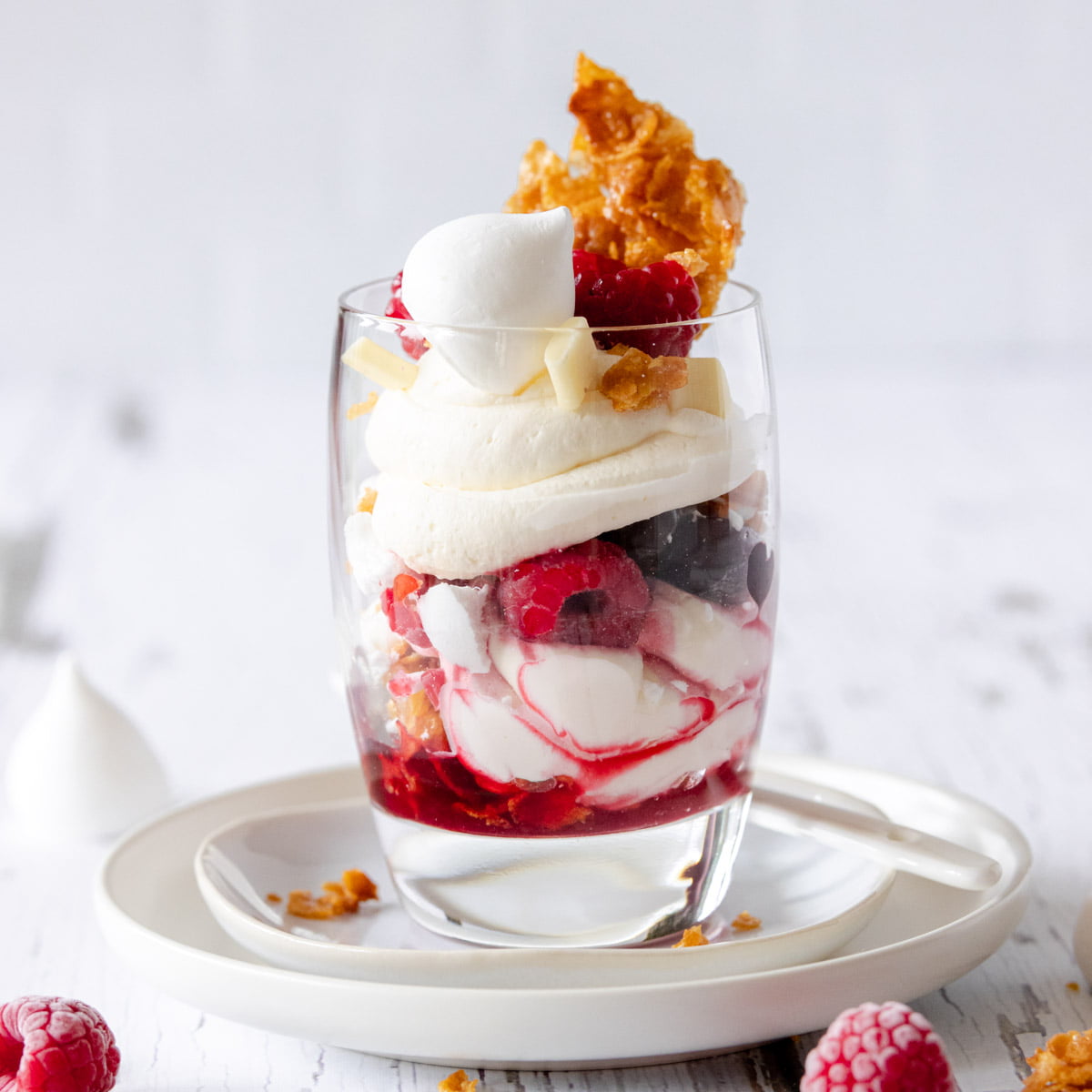
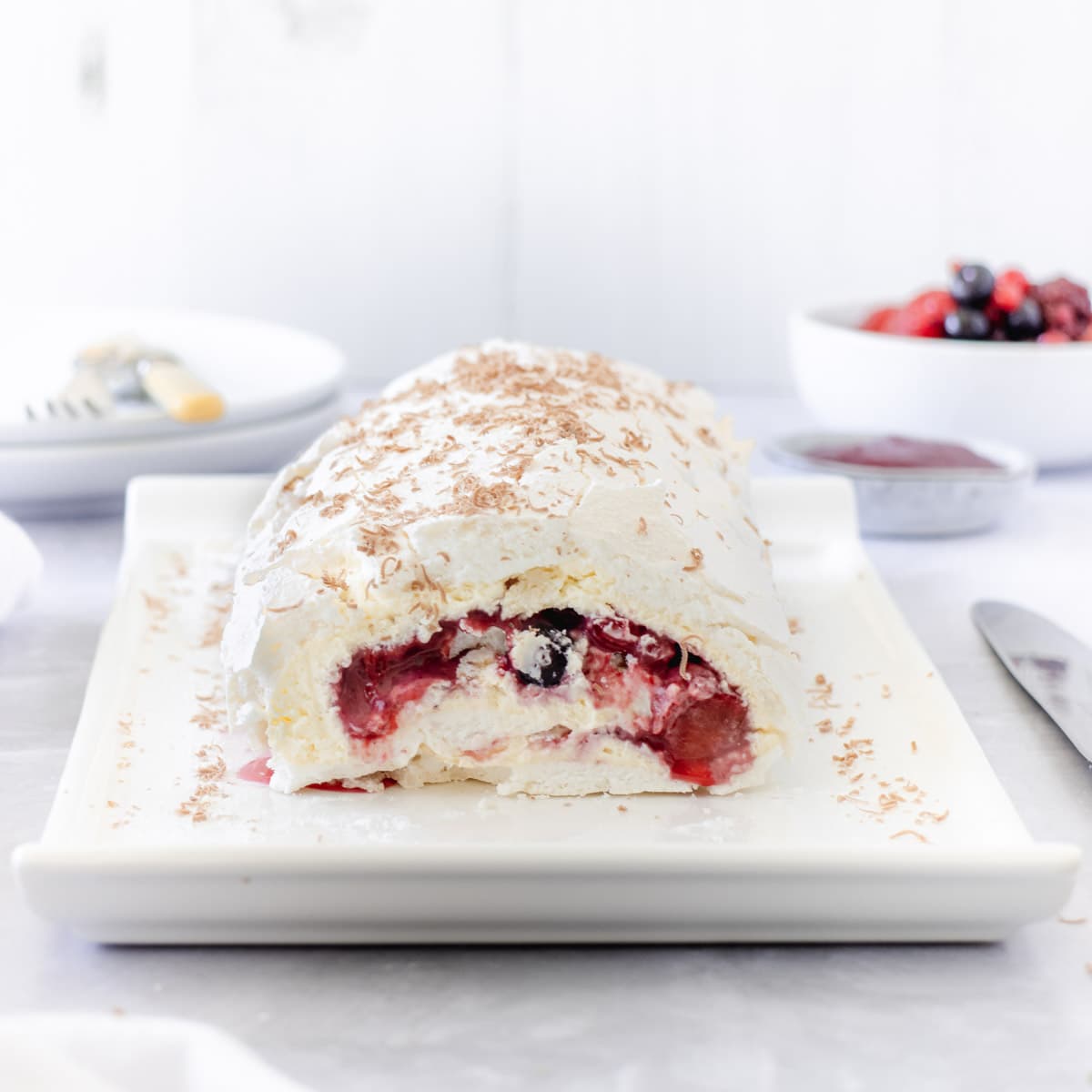
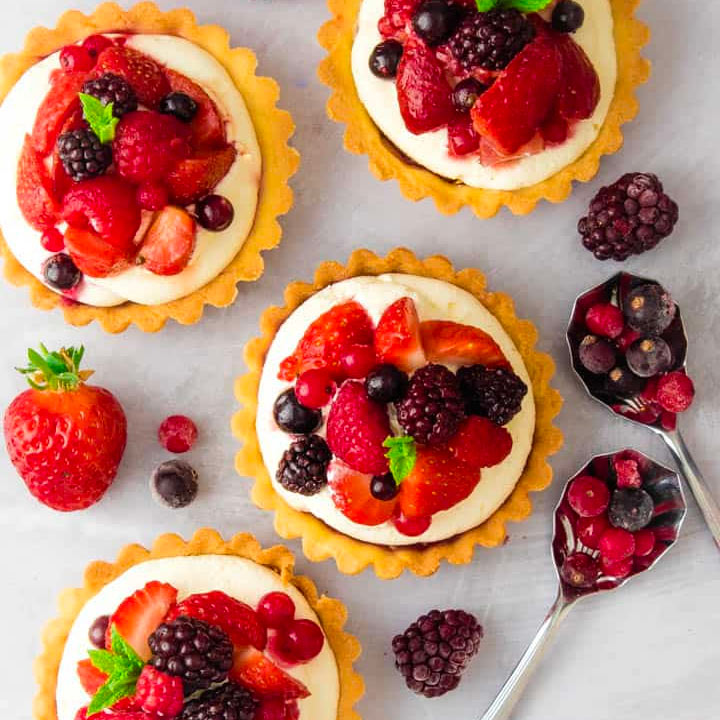
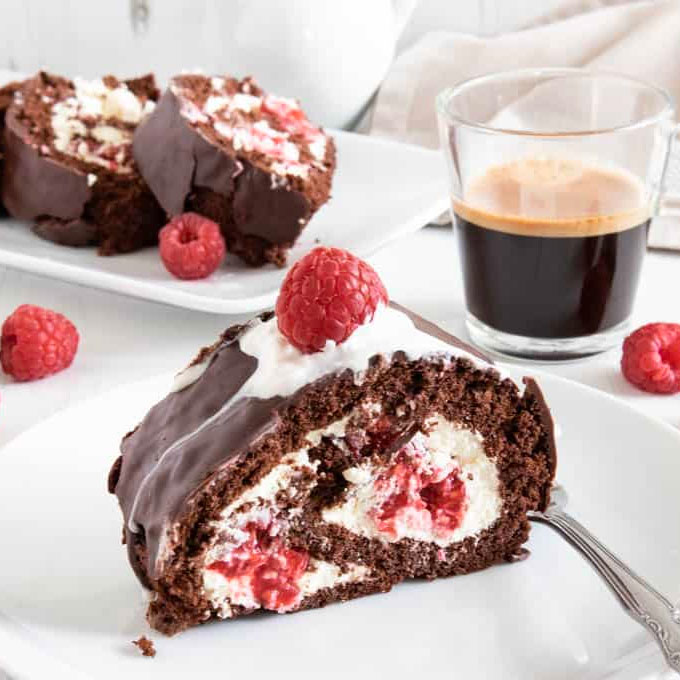

Rhubarb Panna Cotta with Rhubarb Compote
Ingredients
For the Compote
- 400 g Rhubarb fresh and trimmed
- 1 Lemon juice and zest
- 75 g Caster Sugar
- 1 tbsp Honey
For the Panna Cotta
- 2.5 Sheets Gelatine or 1 Packet of Powdered Gelatine approx 12g
- 400 g Double or Heavy Cream
- 150 ml Milk Full-fat
- 60 g Caster Sugar
- 1 tsp Vanilla Bean Paste
Instructions
- To Make the Compote
- Roughly chop the rhubarb stems into pieces approximately 2cm in length
- In a medium saucepan, add the rhubarb, lemon juice and zest, caster sugar and honey, and cover with a lid.
- Heat the rhubarb over a medium heat for 15-20 minutes until the rhubarb has broken down. Stir occasionally to stop the rhubarb catching.
- Allow the compote to cool and keep in a sterilised jar in the fridge for up to 1 week.
- To Make the Panna Cotta
- If using gelatine sheets, fill a bowl with cold water and add the sheets to soak for 5 minutes. See notes for using powdered gelatine.
- In a heavy-bottomed saucepan, add the cream, milk, caster sugar and vanilla bean paste and gently bring to the boil over a gentle heat, stirring occasionally. Remove the saucepan from the heat.
- Take the gelatine sheets and squeeze out any water. Add the gelatine to the heated cream and stir until it has completely dissolved.
- Once dissolved, pass the mixture through a fine sieve into a jug, then divide equally between 6 glasses. Set to chill in the fridge overnight or for at least 6 hours.
- When ready to serve, remove the panna cotta from the fridge and top with the rhubarb compote.
Notes
Nutrition
DISCLAIMER
The nutritional information provided is approximate and is calculated using online tools. Information can vary depending on various factors, but we have endeavoured to be as accurate as possible.


Hi I’ve made this a couple of times…delicious!! Plan to make this for Christmas, how far in advance can I made it?
Thank you
Hi Julie
Thank you so much for your lovely comment — I’m thrilled to hear you’ve enjoyed the recipe and are planning to make it for Christmas! 😊
Panna cotta is a fantastic make-ahead dessert. You can prepare it up to 2-3 days in advance and store it in the fridge, tightly covered, to keep it fresh. The rhubarb compote can also be made ahead — just store it separately in an airtight container in the fridge. Assemble the panna cotta and compote just before serving for the best presentation.
I hope it adds a touch of festive cheer to your celebration. Let me know how it turns out! 🎄✨